
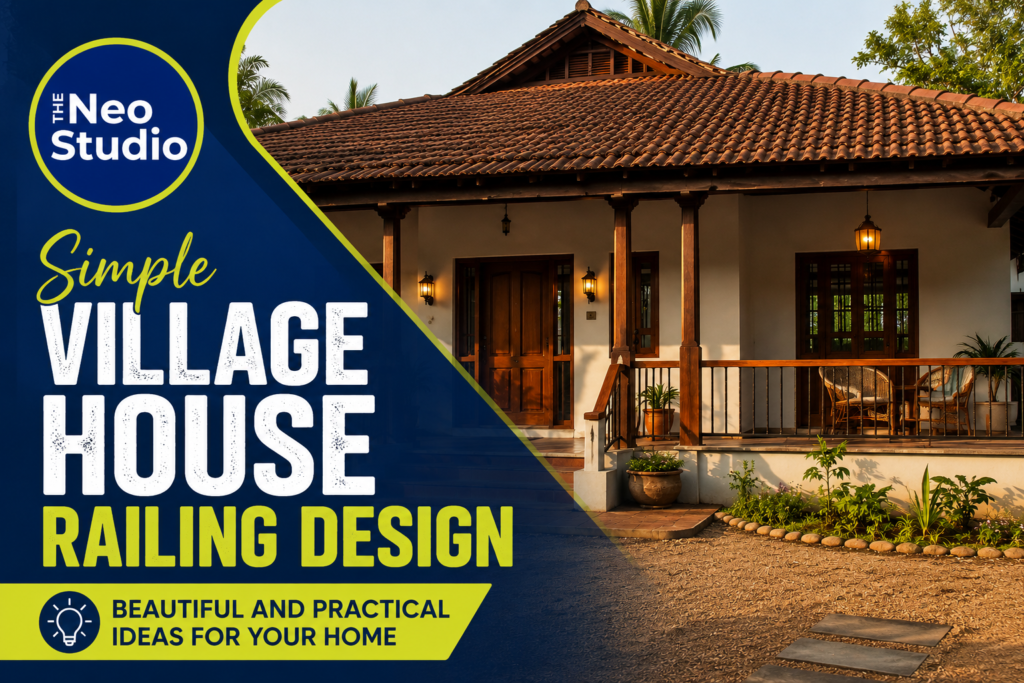
A village house does not need an expensive or complicated exterior to look beautiful. A simple verandah, traditional roof, attractive entrance and well-designed railing can give the home a warm and welcoming appearance.
A railing may seem like a small detail, but it can make a noticeable difference to the front elevation. It provides safety around steps and balconies while also adding character to the verandah.
When planning a complete home exterior, experienced Interior Designers in Bangalore can help bring together the railing, entrance, colours, materials and other architectural details into one cohesive design.
Why Is Railing Important for a Village House?
A railing is more than a decorative feature. It can improve safety while adding visual character to the home.
A well-designed railing can:
- Improve safety around steps
- Make the verandah look complete
- Define the edge of a balcony
- Add character to the entrance
- Complement pillars and walls
- Create a traditional or modern appearance
One common mistake is choosing the railing separately from the rest of the house. Instead, consider the complete elevation. The railing, entrance door, pillars, roof, flooring and exterior colours should feel like they belong together.
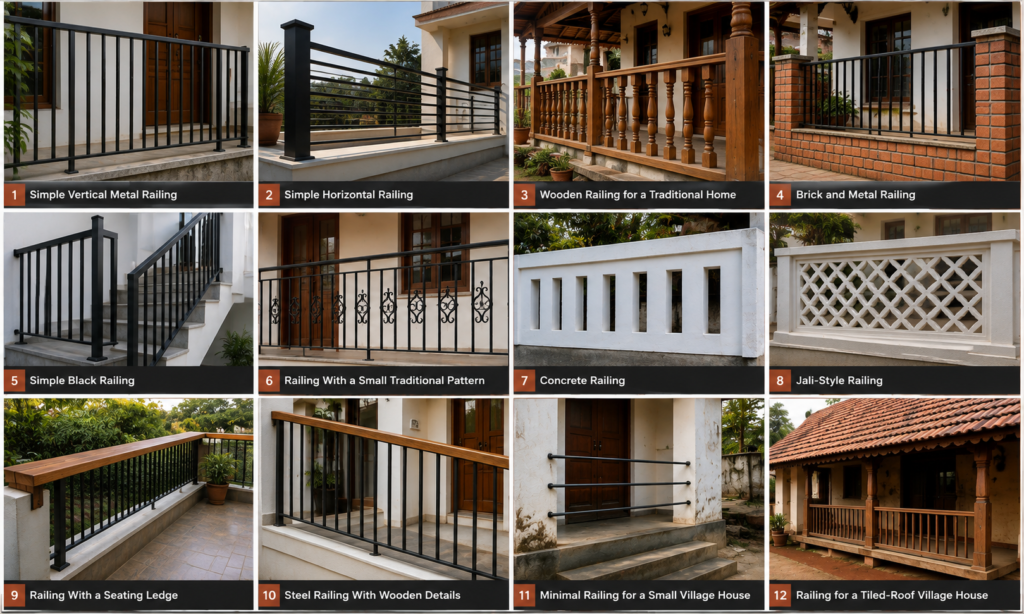
1. Simple Vertical Metal Railing
Vertical metal bars are one of the simplest choices for a village house.
The design can consist of straight vertical bars connected by a strong top rail. There is no need for complicated curves or decorative patterns.
This style works particularly well for:
- Front verandahs
- Entrance steps
- Small balconies
- Raised platforms
A dark finish can give it a modern appearance, while a traditional colour can make it blend with a more classic home.
2. Simple Horizontal Railing
Horizontal metal rails can give a village house a more contemporary appearance.
The clean lines work particularly well with homes that have:
- Simple exterior walls
- Modern windows
- Flat roofs
- Minimal decorative elements
However, safety should be considered when selecting the spacing and arrangement of horizontal members, especially in homes where young children may use the balcony or verandah.
3. Wooden Railing for a Traditional Home
Wood is a natural choice for a traditional village house.
A simple wooden railing can work beautifully with:
- Tiled roofs
- Wooden doors
- Stone walls
- Traditional verandahs
- Earthy exterior colours
You do not need elaborate carving. Straight wooden posts with a strong top rail can create a warm and traditional look.
The main consideration is maintenance. Outdoor wood should be properly treated to protect it from moisture, insects and prolonged exposure to sunlight.
4. Brick and Metal Railing
A combination of brickwork and metal can give a village house a strong and grounded appearance.
One approach is to create a low brick or masonry wall and install a simple metal railing above it.
This combination can work particularly well with rustic homes. It can also visually connect the railing with exposed brick walls, stonework or other natural materials used elsewhere on the property.
5. Simple Black Railing
Black metal is a versatile option for a village house.
A simple matte-black railing can complement:
- White walls
- Cream walls
- Beige exteriors
- Grey walls
- Exposed brick
- Natural stone
Rather than filling the railing with decorative patterns, straight lines can create a cleaner and more contemporary appearance.
6. Railing With a Small Traditional Pattern
If a completely plain railing feels too simple, introduce one subtle decorative element.
You could use:
- Diamond shapes
- Squares
- Circular motifs
- Simple geometric patterns
- Small traditional designs
The important thing is not to overdo it.
When the house already has decorative pillars, windows or a detailed entrance, a heavily decorated railing can make the elevation look crowded.
7. Concrete Railing
Concrete railing can give a home a traditional appearance and can work especially well with masonry construction.
Possible designs include:
- Short parapet walls
- Repeated concrete balusters
- Geometric openings
- Decorative concrete blocks
Concrete can create a solid visual appearance, but it may look heavy if used extensively on a small verandah.
For smaller houses, a lighter metal or wood design may create a more open feeling.
8. Jali-Style Railing
A jali-style railing can add privacy while still allowing light and air through.
Simple geometric patterns can be created using suitable metal, concrete or other materials.
This type of design can be useful for a verandah where you want some separation from the outside without completely closing the space.
For a village house, a simple repeating pattern is often more attractive than an extremely detailed design.
9. Railing With a Seating Ledge
A traditional village verandah is often used for more than simply entering the house.
It can become a place to sit, talk with family members or relax in the evening.
A low masonry railing can therefore be designed with a wider top surface that also works as a seating ledge.
This makes the railing part of the living space rather than treating it as a purely decorative boundary.
10. Steel Railing With Wooden Details
If you want to combine modern and traditional styles, consider using metal with wood.
For example, a simple steel railing with a natural wooden handrail can create an attractive contrast.
This works particularly well when the house already has wooden doors, window frames or other timber elements.
The result can feel modern without losing the warmth associated with traditional village homes.
11. Minimal Railing for a Small Village House
A small house does not need a large or complicated railing.
In fact, a simple railing can make a small front elevation appear more spacious.
Use:
- Thin vertical bars
- A clean top rail
- Minimal decoration
- A restrained colour
Avoid filling a small verandah with heavy patterns. Keeping the design visually light allows the entrance and other architectural features to remain noticeable.
12. Railing for a Tiled-Roof Village House
A sloping tiled roof already gives a home a strong traditional character.
The railing should complement that appearance rather than compete with it.
A combination such as:
Tiled roof + wooden door + simple pillars + metal railing
can create a timeless village-house appearance.
Earthy colours and natural materials can make the overall elevation feel more connected to its surroundings.
How to Choose the Right Railing Material
The best material depends on the home’s location, weather exposure, budget and maintenance requirements.
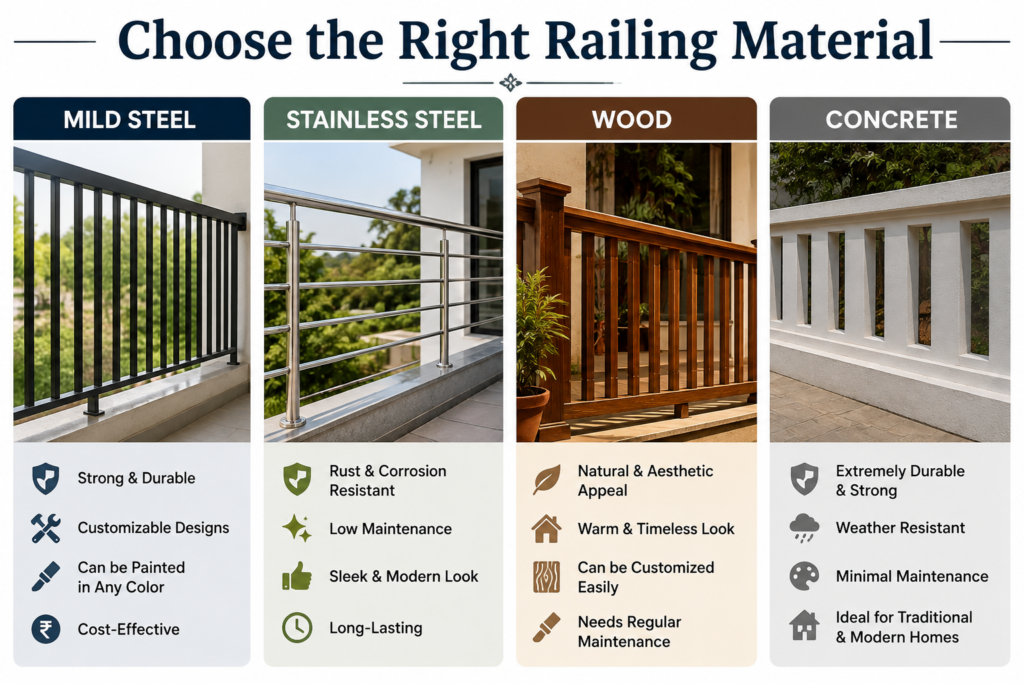
Mild Steel
Mild steel is a popular choice because it is flexible and can be fabricated into many designs.
It works well for both simple and decorative railings.
Proper surface preparation and corrosion protection are important, especially in areas exposed to rain.
Stainless Steel
Stainless steel gives a cleaner and more contemporary appearance.
It generally requires less repainting than mild steel, although the initial cost can be higher.
It is particularly suitable for homeowners who prefer a modern exterior.
Wood
Wood gives a natural and traditional appearance.
It works especially well with tiled roofs and traditional doors.
However, exterior wooden railings need appropriate treatment and maintenance.
Concrete
Concrete is strong and can complement masonry houses.
It is a good option when you want the railing to feel like an integrated part of the building.
The downside is its heavier appearance compared with metal or wood.
What Is the Best Low-Budget Railing Design?
If cost is important, simplicity is usually the better approach.
A straightforward metal railing with vertical bars and a basic top rail can be practical and economical compared with an extensively customised design.
Instead of spending most of the budget on decorative patterns, consider investing in:
- Good-quality material
- Proper fabrication
- Strong joints
- Corrosion protection
- Secure installation
- A durable finish
A simple railing that lasts for years is often a better choice than an elaborate railing that requires frequent repairs.
How Should the Railing Match the House?
The railing should complement the overall architectural style.
For a Traditional Village House
Consider:
- Wood
- Concrete
- Traditional metalwork
- Natural colours
- Simple motifs
For a Modern Village House
Consider:
- Straight metal lines
- Minimal patterns
- Matte finishes
- Simple geometric designs
For a Rustic Home
Consider:
- Exposed brick
- Wood
- Dark metal
- Stone
- Earthy tones
For a Small Home
Choose a visually lighter railing. Large decorative patterns can make a small frontage feel crowded.
Vertical or Horizontal Railing: Which Is Better?
Both styles can work.
Vertical bars generally create a more traditional appearance and can visually emphasise the height of the space.
Horizontal lines tend to give a more contemporary look and can make the railing appear wider.
The final choice should also consider safety, especially the height, spacing and construction of the railing.
What Colours Work Well for Village House Railings?
The railing colour should complement the exterior rather than compete with it.
Popular choices include:
- Black
- Dark brown
- White
- Charcoal grey
- Natural wood
- Dark green
- Muted metallic finishes
For example, a dark railing can provide a strong contrast against a light-coloured exterior.
A wooden finish can create a softer appearance when combined with earthy walls and a tiled roof.
Common Railing Design Mistakes
Using Too Many Decorative Elements
A complicated railing can overwhelm an otherwise simple house.
Ignoring Maintenance
Outdoor railings are exposed to rain, dust and sunlight. Material and finish should be selected accordingly.
Choosing Only Based on Price
A cheaper railing may cost more over time if it needs frequent repainting or repairs.
Ignoring the Architecture
A highly modern railing may look out of place on a strongly traditional home.
Forgetting Safety
A railing should be designed for safe everyday use. Height, spacing, strength and installation all matter.
How to Make a Simple Railing Look Premium
You do not need an expensive design to create a premium appearance.
Focus on proportion and detailing.
A simple railing can look elegant when:
- The bars are evenly spaced
- The joints are neatly finished
- The material has a consistent finish
- The colour complements the house
- The railing height is appropriate
- The surrounding pillars and flooring are well coordinated
Good design is often about knowing what to leave out.
Railing Ideas for Different Areas of a Village House
Front Verandah
Use a simple vertical metal or wooden railing.
Entrance Steps
Choose a sturdy railing with a comfortable handrail.
Balcony
A lighter metal design can maintain an open view.
Terrace
The railing should provide adequate safety while fitting naturally into the building’s exterior.
Raised Verandah
A low masonry wall combined with a metal railing can provide both visual weight and openness.
How The Neo Studio Can Approach Village House Railing Design
At The Neo Studio, railing design can be considered as part of the complete home design rather than as an isolated feature.
The railing should work with:
- Front elevation
- Verandah
- Pillars
- Roof
- Entrance door
- Windows
- Exterior colours
- Flooring
- Outdoor lighting
- Landscaping
A well-planned exterior is not just about selecting a railing from a catalogue. The proportions, materials, colours and surrounding architecture all need to work together.
For homeowners looking for a complete residential design approach, Interior Designers in Bangalore can help coordinate these elements while keeping the home’s individual character intact.
The goal is not to make the railing the most noticeable feature.
The goal is to make it feel like it naturally belongs to the house.
Final Thoughts
A simple village house railing design can be attractive, functional and affordable at the same time.
You can choose from straightforward metal railings, traditional wooden designs, brick-and-metal combinations, concrete patterns or simple jali styles.
The right choice depends on the architecture of your home, available space, budget, weather conditions and the amount of maintenance you are comfortable with.
For a village home, simplicity can be a major design advantage.
A clean railing combined with a welcoming verandah, suitable colours, good lighting and natural materials can create an exterior that feels comfortable, traditional and contemporary at the same time.
The Neo Studio focuses on creating cohesive spaces where even small architectural details contribute to the overall character of the home.
Frequently Asked Questions
What is the best railing for a simple village house?
A simple metal, wooden or concrete railing can work well. The choice depends on the home’s architecture, budget, weather conditions and maintenance requirements.
Which railing is best for a village verandah?
A simple metal or wooden railing is a practical option. A low masonry wall with a railing above it can also work well for a traditional verandah.
Is metal railing suitable for a village house?
Yes. Metal can be designed in both traditional and contemporary styles. Proper corrosion protection is important for outdoor use.
Can I use a wooden railing outside?
Yes, but outdoor wood needs appropriate treatment and regular maintenance to protect it from moisture, insects and weather.
What is an affordable railing design?
A basic metal railing with straight vertical bars is often a practical budget-friendly option. The final price depends on material, size, fabrication and installation.
How can I make a village house railing look modern?
Use clean lines, simple geometric patterns, restrained colours and minimal decoration. The railing should complement the rest of the elevation.
Should a village house railing be decorative?
Not necessarily. A simple, well-proportioned railing can look more attractive than a heavily decorated design, particularly when the house already has architectural details.